
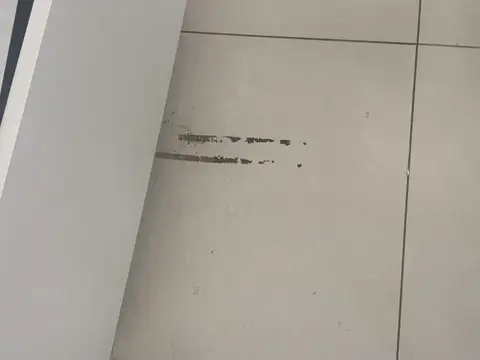


From November to April, every Edmonton business imports the city's ice melt, sand and gravel one pair of boots at a time. By March, lobby floors that looked new in October are hazy, scratched and stained white along the walkways. Most of that damage is preventable, and nearly all of it is decided by what you put in place before the first real snowfall.
Winter salt damages commercial floors in three ways: residue leaves a white film that dulls and breaks down floor finish, gravel and sand grind into the surface like sandpaper, and meltwater makes entrances slippery and carries salt deep into carpet. The fix is a protective floor finish before winter, enough entrance matting to catch grit at the door, daily residue removal with the right cleaner, and a scheduled deep scrub mid season and in spring.
Three ways winter attacks your floors
Residue
Ice melt dries into a white haze. Mopped with the wrong product, it simply spreads, and over time it softens and dulls the floor finish.
Abrasion
Sand and gravel trapped under shoes scratch through finish and into the floor itself, starting at the door and following the traffic path.
Moisture
Meltwater makes entrances slippery for staff and visitors and wicks salt into carpet fibres, leaving stiff white stains.
What salt does to each type of floor
| Floor type | What winter does | What protects it |
|---|---|---|
| Vinyl composition tile (VCT) | White haze, dull and worn finish along traffic lanes | Fresh finish coats before winter, neutralizer cleaning, regular burnishing |
| Sealed or polished concrete | Residue film and loss of sheen; untreated salt left for long periods can damage the surface | Daily residue removal, periodic machine scrub, maintaining the sealer |
| Ceramic and porcelain tile | White lines in grout, cloudy film on the tile | Neutralizer cleaning, grout scrubbing, sealed grout |
| Luxury vinyl plank and sheet vinyl | Film build-up and scratches in the wear layer from grit | Matting, frequent dust mopping, manufacturer approved cleaners |
| Carpet and carpet tile | White crust, stiff fibres, permanent staining if left all season | Entrance matting, spot extraction during winter, full extraction in spring |
| Hardwood and laminate | Finish damage and swelling at seams from standing meltwater | Keep away from the entry zone or fully mat it; dry immediately |
Build your winter floor plan
Answer four questions about your main entrance and get a winter risk rating and a cleaning schedule built for your floor.
Winter floor plan builder
For Edmonton offices, clinics, retail, common areas and managed properties
Before first snow
Daily
Weekly and monthly
Spring reset
Matting: the cheapest floor protection you can buy
Grit removed at the door never reaches your floor. Facility managers use three zones of matting so each step strips a little more off the shoe. Many aim for roughly 3 to 4.5 metres (10 to 15 feet) of matting across all three zones in winter.
Scraper mat
Coarse, open surface that knocks loose gravel and snow off before anyone steps inside.
Scraper and wiper
Catches fine grit and starts absorbing meltwater. Empty or swap it often in storms.
Wiper mat
Absorbent mat that dries shoes before they reach hard floor or carpet.
A mat only works while it has room to hold dirt. Once it is saturated, it starts spreading salt instead of catching it, so vacuum and rotate mats on a schedule.
Why ordinary mopping makes salt worse
Salt residue does not dissolve well in a standard all-purpose cleaner. Mopping with one usually moves the white film around and leaves a streaky haze when it dries. Crews use a salt neutralizer or a cleaner made for ice melt residue, rinse with clean water, and change the mop water often. On larger floors, an auto scrubber cleans and picks up the dirty solution in one pass, which is the only reliable way to keep a busy lobby clear in January.
Book a pre-winter floor scrub before the first big snow
ELR scrubs, refinishes and protects commercial floors across Edmonton, then keeps entrances clear through winter with recurring service. Fully bonded, insured and WCB compliant. Send photos of your entrance with your request and we will recommend the right plan.
The Edmonton winter floor calendar
Protect
Deep scrub, then fresh finish coats on resilient floors and sealer on concrete and grout. Put full matting in place and clean carpets so salt has less to cling to.
Maintain
Daily residue removal at entrances, mats vacuumed and rotated, spot extraction on carpet, and a mid season machine scrub of the busiest areas.
Reset
Full scrub or strip and refinish where finish has worn through, hot water extraction on carpet, and grout cleaning before summer.
What winter damage really costs
- Earlier refinishing. Finish that wears through by February means a full strip and refinish sooner than planned.
- Shorter floor and carpet life. Grit that reaches the floor itself cannot be buffed out, and salt-stained carpet often has to be replaced.
- Slip risk. Wet, salty entrances are a safety hazard for staff, clients and tenants.
- First impressions. A hazy, streaked lobby is the first thing every visitor sees.
See ELR's hard floor scrubbing and care, carpet cleaning and common area cleaning, or read what commercial cleaning costs in Edmonton.
Frequently asked questions
How do you remove salt stains from commercial floors?
Use a salt neutralizer or a cleaner made for ice melt residue, rinse with clean water, and change the mop water often. On larger floors an auto scrubber cleans and recovers the solution in one pass. Ordinary all-purpose cleaners tend to spread the residue.
Should commercial floors be waxed before winter?
Yes, for resilient floors such as VCT. A deep scrub and fresh finish coats in October or early November give the floor a protective layer that takes the wear instead of the floor itself.
How often should entrance mats be cleaned in winter?
Vacuum entrance mats daily in busy buildings and rotate or swap saturated mats during storms. A full mat spreads salt instead of catching it.
Does road salt damage concrete floors?
Salt residue left on concrete leaves a film and dulls the sealer, and untreated salt left for long periods can damage the surface. Daily residue removal and a maintained sealer protect it.
Which areas does ELR serve for winter floor care?
Edmonton, St. Albert, Sherwood Park, Beaumont, Leduc, Nisku, Spruce Grove and surrounding communities.
Always follow your flooring manufacturer's care instructions. Written by Raymond Onwude, founder of ELR Facilities Services.
From November to April, every Edmonton business imports the city's ice melt, sand and gravel one pair of boots at a time. By March, lobby floors that looked new in October are hazy, scratched and stained white along the walkways. Most of that damage is preventable, and nearly all of it is decided by what you put in place before the first real snowfall.
Winter salt damages commercial floors in three ways: residue leaves a white film that dulls and breaks down floor finish, gravel and sand grind into the surface like sandpaper, and meltwater makes entrances slippery and carries salt deep into carpet. The fix is a protective floor finish before winter, enough entrance matting to catch grit at the door, daily residue removal with the right cleaner, and a scheduled deep scrub mid season and in spring.
Three ways winter attacks your floors
Residue
Ice melt dries into a white haze. Mopped with the wrong product, it simply spreads, and over time it softens and dulls the floor finish.
Abrasion
Sand and gravel trapped under shoes scratch through finish and into the floor itself, starting at the door and following the traffic path.
Moisture
Meltwater makes entrances slippery for staff and visitors and wicks salt into carpet fibres, leaving stiff white stains.
What salt does to each type of floor
| Floor type | What winter does | What protects it |
|---|---|---|
| Vinyl composition tile (VCT) | White haze, dull and worn finish along traffic lanes | Fresh finish coats before winter, neutralizer cleaning, regular burnishing |
| Sealed or polished concrete | Residue film and loss of sheen; untreated salt left for long periods can damage the surface | Daily residue removal, periodic machine scrub, maintaining the sealer |
| Ceramic and porcelain tile | White lines in grout, cloudy film on the tile | Neutralizer cleaning, grout scrubbing, sealed grout |
| Luxury vinyl plank and sheet vinyl | Film build-up and scratches in the wear layer from grit | Matting, frequent dust mopping, manufacturer approved cleaners |
| Carpet and carpet tile | White crust, stiff fibres, permanent staining if left all season | Entrance matting, spot extraction during winter, full extraction in spring |
| Hardwood and laminate | Finish damage and swelling at seams from standing meltwater | Keep away from the entry zone or fully mat it; dry immediately |
Build your winter floor plan
Answer four questions about your main entrance and get a winter risk rating and a cleaning schedule built for your floor.
Winter floor plan builder
For Edmonton offices, clinics, retail, common areas and managed properties
Before first snow
Daily
Weekly and monthly
Spring reset
Matting: the cheapest floor protection you can buy
Grit removed at the door never reaches your floor. Facility managers use three zones of matting so each step strips a little more off the shoe. Many aim for roughly 3 to 4.5 metres (10 to 15 feet) of matting across all three zones in winter.
Scraper mat
Coarse, open surface that knocks loose gravel and snow off before anyone steps inside.
Scraper and wiper
Catches fine grit and starts absorbing meltwater. Empty or swap it often in storms.
Wiper mat
Absorbent mat that dries shoes before they reach hard floor or carpet.
A mat only works while it has room to hold dirt. Once it is saturated, it starts spreading salt instead of catching it, so vacuum and rotate mats on a schedule.
Why ordinary mopping makes salt worse
Salt residue does not dissolve well in a standard all-purpose cleaner. Mopping with one usually moves the white film around and leaves a streaky haze when it dries. Crews use a salt neutralizer or a cleaner made for ice melt residue, rinse with clean water, and change the mop water often. On larger floors, an auto scrubber cleans and picks up the dirty solution in one pass, which is the only reliable way to keep a busy lobby clear in January.
Book a pre-winter floor scrub before the first big snow
ELR scrubs, refinishes and protects commercial floors across Edmonton, then keeps entrances clear through winter with recurring service. Fully bonded, insured and WCB compliant. Send photos of your entrance with your request and we will recommend the right plan.
The Edmonton winter floor calendar
Protect
Deep scrub, then fresh finish coats on resilient floors and sealer on concrete and grout. Put full matting in place and clean carpets so salt has less to cling to.
Maintain
Daily residue removal at entrances, mats vacuumed and rotated, spot extraction on carpet, and a mid season machine scrub of the busiest areas.
Reset
Full scrub or strip and refinish where finish has worn through, hot water extraction on carpet, and grout cleaning before summer.
What winter damage really costs
- Earlier refinishing. Finish that wears through by February means a full strip and refinish sooner than planned.
- Shorter floor and carpet life. Grit that reaches the floor itself cannot be buffed out, and salt-stained carpet often has to be replaced.
- Slip risk. Wet, salty entrances are a safety hazard for staff, clients and tenants.
- First impressions. A hazy, streaked lobby is the first thing every visitor sees.
See ELR's hard floor scrubbing and care, carpet cleaning and common area cleaning, or read what commercial cleaning costs in Edmonton.
Frequently asked questions
How do you remove salt stains from commercial floors?
Use a salt neutralizer or a cleaner made for ice melt residue, rinse with clean water, and change the mop water often. On larger floors an auto scrubber cleans and recovers the solution in one pass. Ordinary all-purpose cleaners tend to spread the residue.
Should commercial floors be waxed before winter?
Yes, for resilient floors such as VCT. A deep scrub and fresh finish coats in October or early November give the floor a protective layer that takes the wear instead of the floor itself.
How often should entrance mats be cleaned in winter?
Vacuum entrance mats daily in busy buildings and rotate or swap saturated mats during storms. A full mat spreads salt instead of catching it.
Does road salt damage concrete floors?
Salt residue left on concrete leaves a film and dulls the sealer, and untreated salt left for long periods can damage the surface. Daily residue removal and a maintained sealer protect it.
Which areas does ELR serve for winter floor care?
Edmonton, St. Albert, Sherwood Park, Beaumont, Leduc, Nisku, Spruce Grove and surrounding communities.
Always follow your flooring manufacturer's care instructions. Written by Raymond Onwude, founder of ELR Facilities Services.